
We are here for you
Thank you! Your submission has been received!
Oops! Something went wrong while submitting the form.


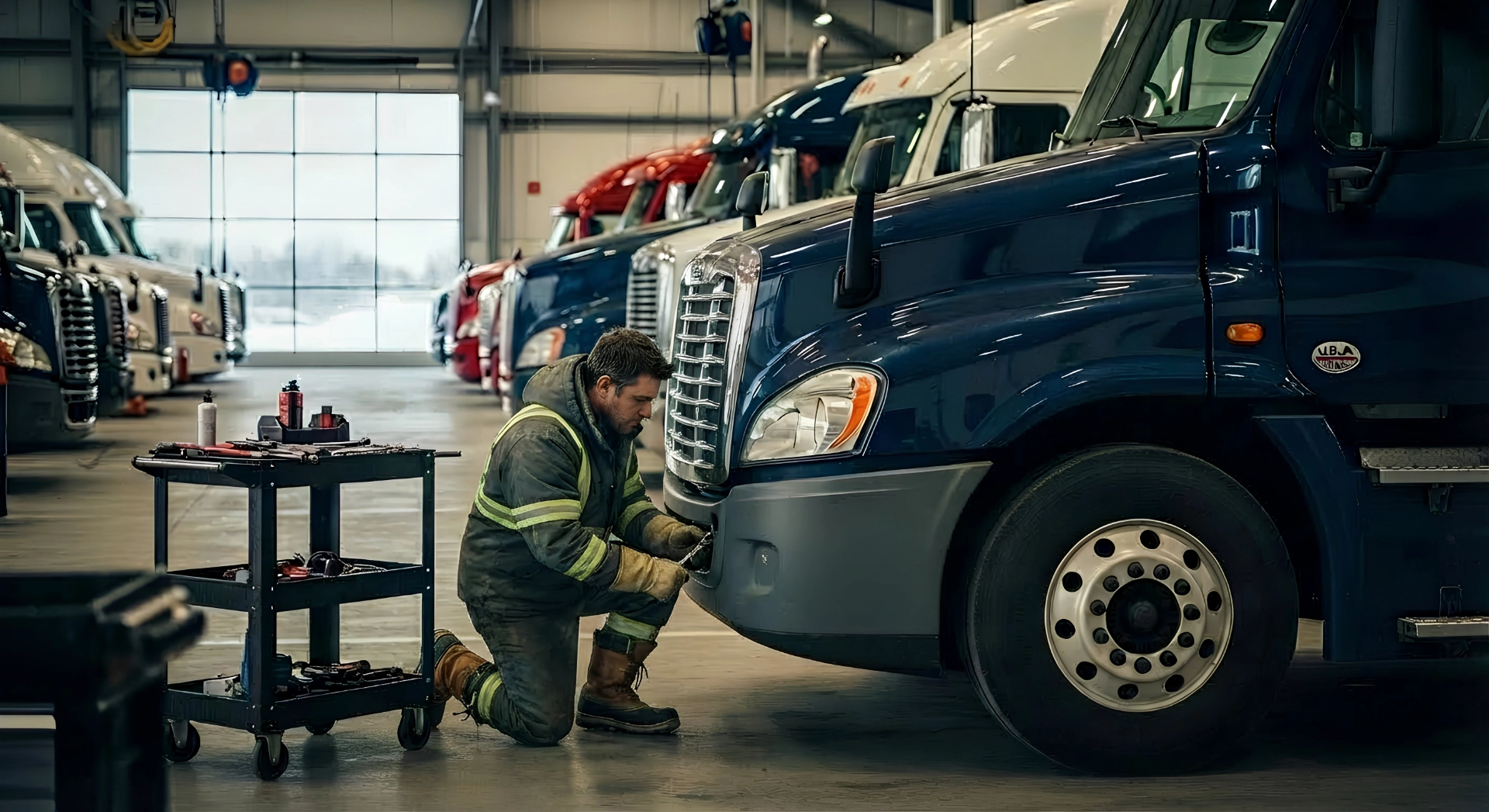
Most fleet managers know their trailers are not getting the same maintenance attention as their tractors. They know it, and they have learned to live with it, because there are always more urgent things demanding budget and technician time. The problem is that living with it has a cost that shows up quietly: in CSA violations, in roadside events caused by trailer brake and lighting failures, in wheel-end failures that could have been caught during a PM. The gap between tractor maintenance and trailer maintenance is real and persistent. The reasons it exists are structural, not accidental, and understanding them is the first step to narrowing the gap before it becomes expensive.
The most straightforward explanation for why trailers receive less maintenance attention than tractors is also the most uncomfortable one: they cost less to buy, so they get treated as lower-priority assets.
A new Class 8 tractor currently costs in the range of $170,000 to $200,000 or more depending on spec. A new dry van trailer runs roughly $40,000, with refrigerated units adding $10,000 to $20,000 on top of that. Charles Willmott, a fleet consultant and former executive at Strick Trailers with 25 years in trailer manufacturing, put it plainly in an interview with Trucking Info: "Just that cost delta alone creates a natural priority for fleets to focus on their power units."
That priority calculus is rational from an asset protection standpoint but breaks down when applied to maintenance. The cost of a trailer does not determine the consequence of its failure. A trailer brake violation at a roadside inspection generates the same CSA points against the carrier as a tractor brake violation. A wheel-end failure on a trailer that causes an accident does not carry a smaller legal exposure because the trailer was cheaper to acquire.
The price difference between a tractor and a trailer sets the initial priority order in most fleets, but that priority order does not align with how risk actually distributes across the equipment.
The second structural reason is less visible but just as significant: the technician workforce was built around power unit complexity.
Tractors carry the engine, transmission, aftertreatment system, electronic control modules, and most of the systems that require specialized diagnostic tools and training. Trailers, by comparison, have historically been simpler equipment. Brakes, lights, tires, landing gear, coupling hardware, and the structural box itself do not require the same level of expertise to service. That simplicity made it easy to treat trailer maintenance as a lower-skill task, handled separately from or alongside tractor service without requiring dedicated technicians.
The industry publication Fleet Equipment has documented this pattern directly, quoting Link Manufacturing's technical support specialist Chuck Boden: "Tractors get the lion's share of attention because they are more often part of a preventive maintenance program. While trailers may be parked on a drop lot somewhere, tractors are naturally inspected more frequently, because they are more maintenance-intensive, they are more indispensable and they are more easily served at a hub or maintenance location."
That dynamic is now shifting as trailers add telematics systems, tire pressure monitoring, solar-powered tracking, and increasingly complex electrical architectures. Willmott described the coming change directly: trailers are "no longer just a box on wheels" and the maintenance complexity required to service them is moving toward parity with tractors. Fleets whose technician development programs did not anticipate this are already behind.
Even when the budget and the technicians are available, trailers present a logistics problem that tractors do not: they are often not where the maintenance is.
Tractors return to a home terminal, a maintenance hub, or a yard regularly as part of their operating cycle. Pre-trip inspections happen before dispatch, and those inspections are anchored to wherever the tractor starts its day. When something is flagged, the tractor is relatively accessible.
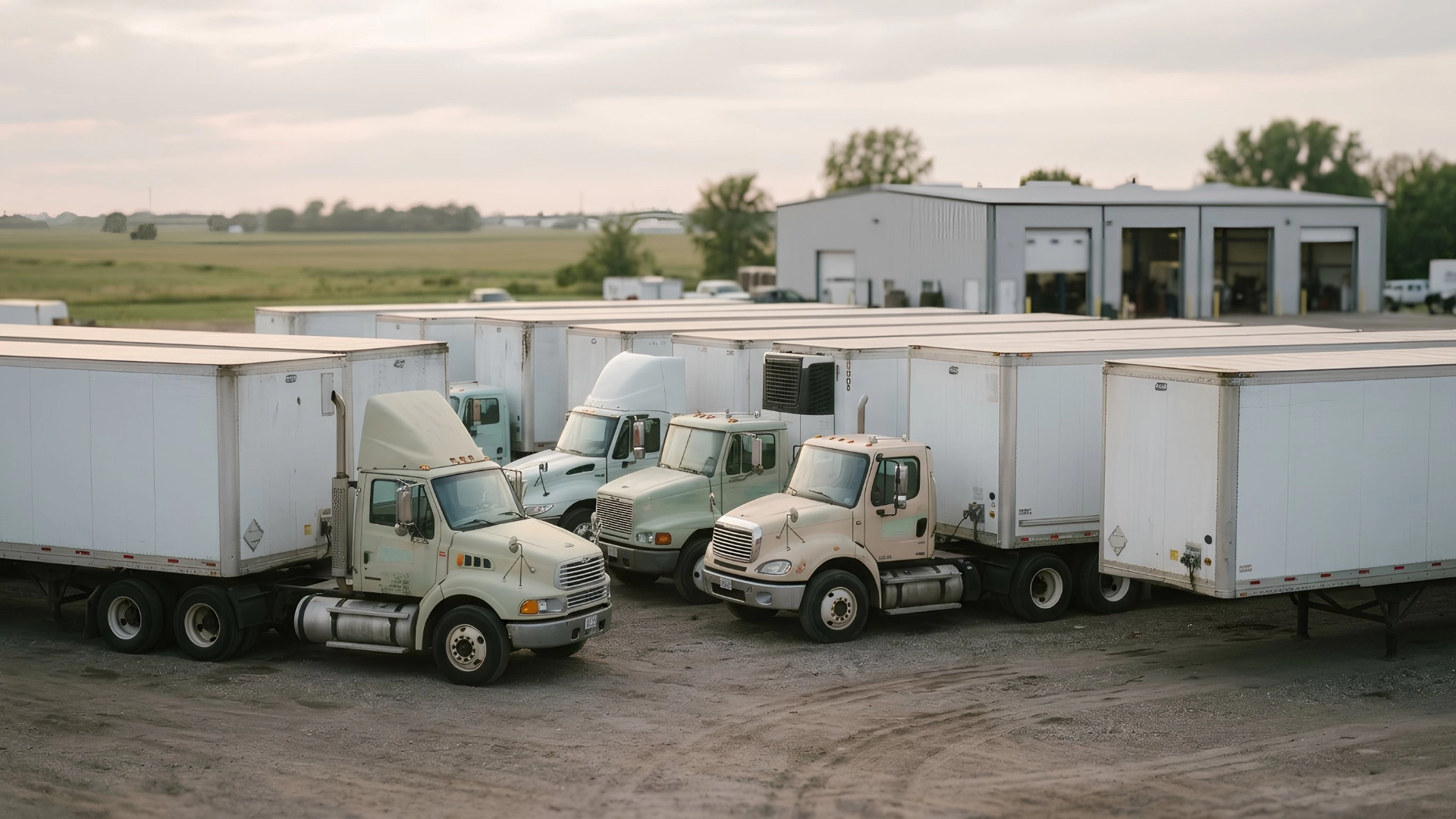
Trailers live differently. Many are dropped at customer facilities, distribution centers, or staging yards for days at a time. Some sit on drop lots in cities where the fleet has no maintenance presence. The tractor pulls away and the trailer stays behind, often unattended and uninspected, until a driver hooks up and hauls it to the next stop. That physical separation from the fleet's maintenance infrastructure means PM intervals get interrupted or extended by default, not by decision.
Willmott identified this as one of the core reasons fleets turn to outside service providers for trailer maintenance: "they don't have the right infrastructure to adequately deal with trailers." The maintenance system was built for equipment that comes home on a predictable schedule. Trailers frequently do not.
ATRI's 2024 operational cost survey covered 150,869 truck-tractors and 395,934 trailers, a ratio of roughly 2.6 trailers per tractor. That ratio is deliberate. Most fleets run more trailers than tractors to ensure tractors are never waiting on an available trailer. The consequence is that each trailer accumulates fewer maintenance touches per year than each tractor, simply because the workload is spread across a larger equipment pool.
When a fleet schedules PM at a fixed mileage interval, the tractor reaches that interval predictably based on how many miles it drives each week. A trailer that sits on a customer's dock for ten days, then runs two loads, then drops at another facility, covers mileage and time in a pattern that is harder to track against a PM schedule. Without a dedicated system for trailer PM intervals that accounts for time rather than just mileage, trailers drift past their service windows without anyone catching it.
The result is not just deferred maintenance. It is maintenance that was scheduled but not triggered because the tracking system was built around tractor operating patterns, not trailer ones.
Most fleet maintenance systems are built and benchmarked around tractor data. Maintenance cost per mile, breakdown frequency, repair history, and PM compliance are tracked at the unit level for tractors with a level of detail and consistency that trailers often do not receive. Fleet Maintenance's reporting on fleet KPI practices confirms that separating tractor versus trailer data is considered a more sophisticated benchmarking practice, not a standard one.
When trailer maintenance costs are not tracked separately, two things happen. First, the actual cost of trailer failures gets absorbed into a combined maintenance figure that makes the problem harder to see. Second, there is no baseline against which to measure improvement, which means there is no pressure to build one.
The fleets that have shifted to tracking trailer maintenance data separately report a clearer picture of where their trailer-related roadside events are coming from and what it is actually costing them per unit. Without that visibility, the underinvestment continues because no one can prove its cost clearly enough to reallocate budget toward fixing it.
The consequences of underfunding trailer maintenance land in two places: roadside inspections and liability exposure. The trailer DOT inspection violations that produce CSA hits and out-of-service orders are disproportionately generated by the systems that get the least attention in a tractor-first maintenance culture: brakes, lights, and annual inspection documentation. Darry Stuart, CEO of DWS Fleet Management Services, told Trucking Info he has seen multiple court cases where wheel-end failures on trailers led to significant jury awards against fleets. The maintenance record, or lack of one, is exhibit A in those cases.
A structured preventive maintenance program that includes trailers on a defined, documented schedule is not a different kind of maintenance than what fleets already do for tractors. It is the same discipline applied consistently to a different class of asset. The semi truck preventive maintenance schedule on this site covers tractor intervals in detail. The trailer equivalent requires the same commitment to intervals, records, and accountability.
For fleets that run trailers across multiple states and need consistent maintenance coverage regardless of where the trailer is sitting, a nationwide truck repair network with vetted partner shops across 48 states provides access to capable facilities in locations where the fleet has no yard presence. The infrastructure problem that drop lots create does not have to default to deferred maintenance. Access to truck parts and tires and repair services through a coordinated network means trailer PM does not have to wait for the unit to come home.
If your fleet runs trailers that are consistently getting less structured attention than your tractors, reach out to our team to discuss what a consistent trailer maintenance program looks like across your operating footprint.
This article draws on industry analysis and direct source reporting from the following: