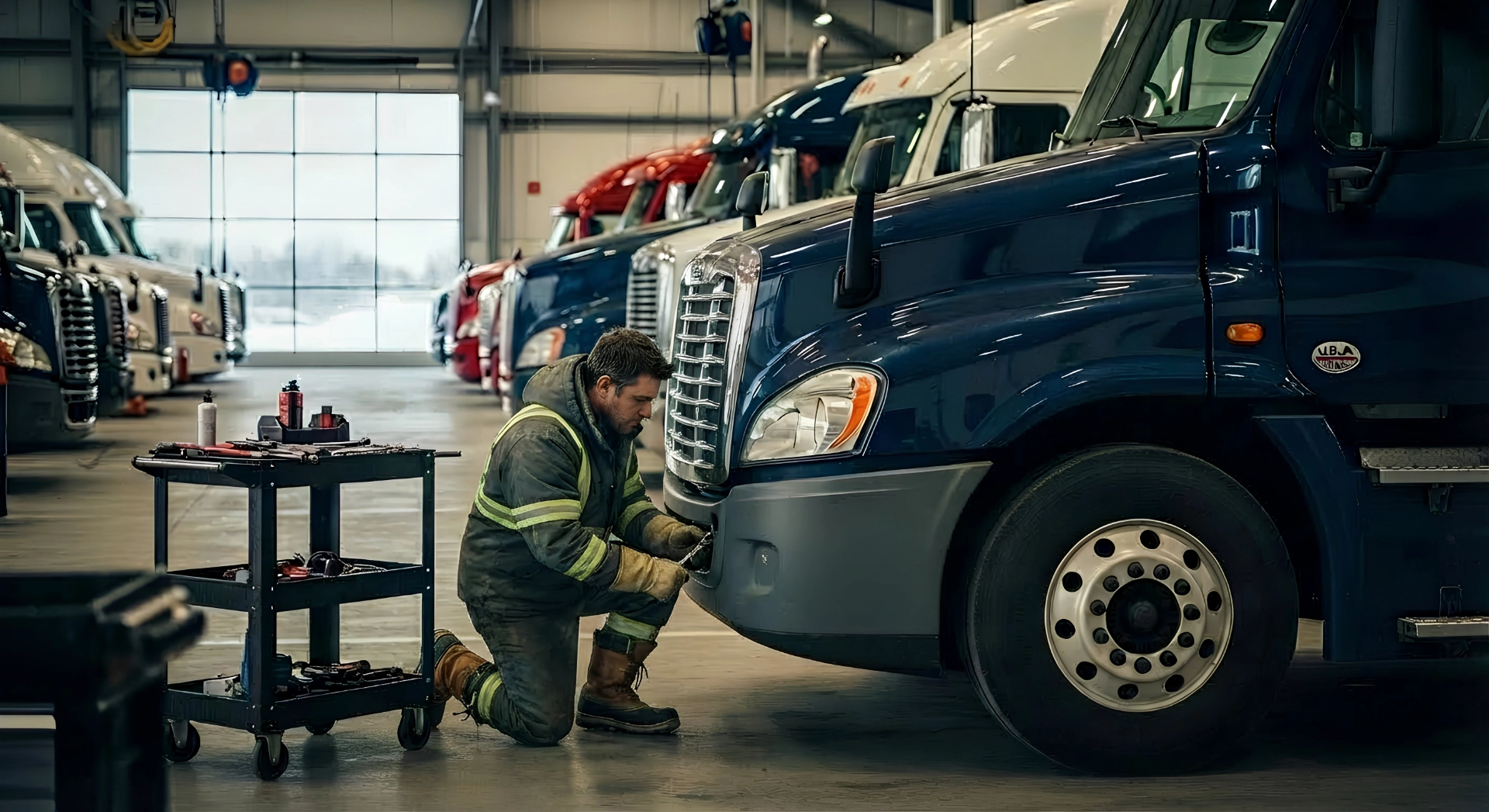

We are here for you
Thank you! Your submission has been received!
Oops! Something went wrong while submitting the form.
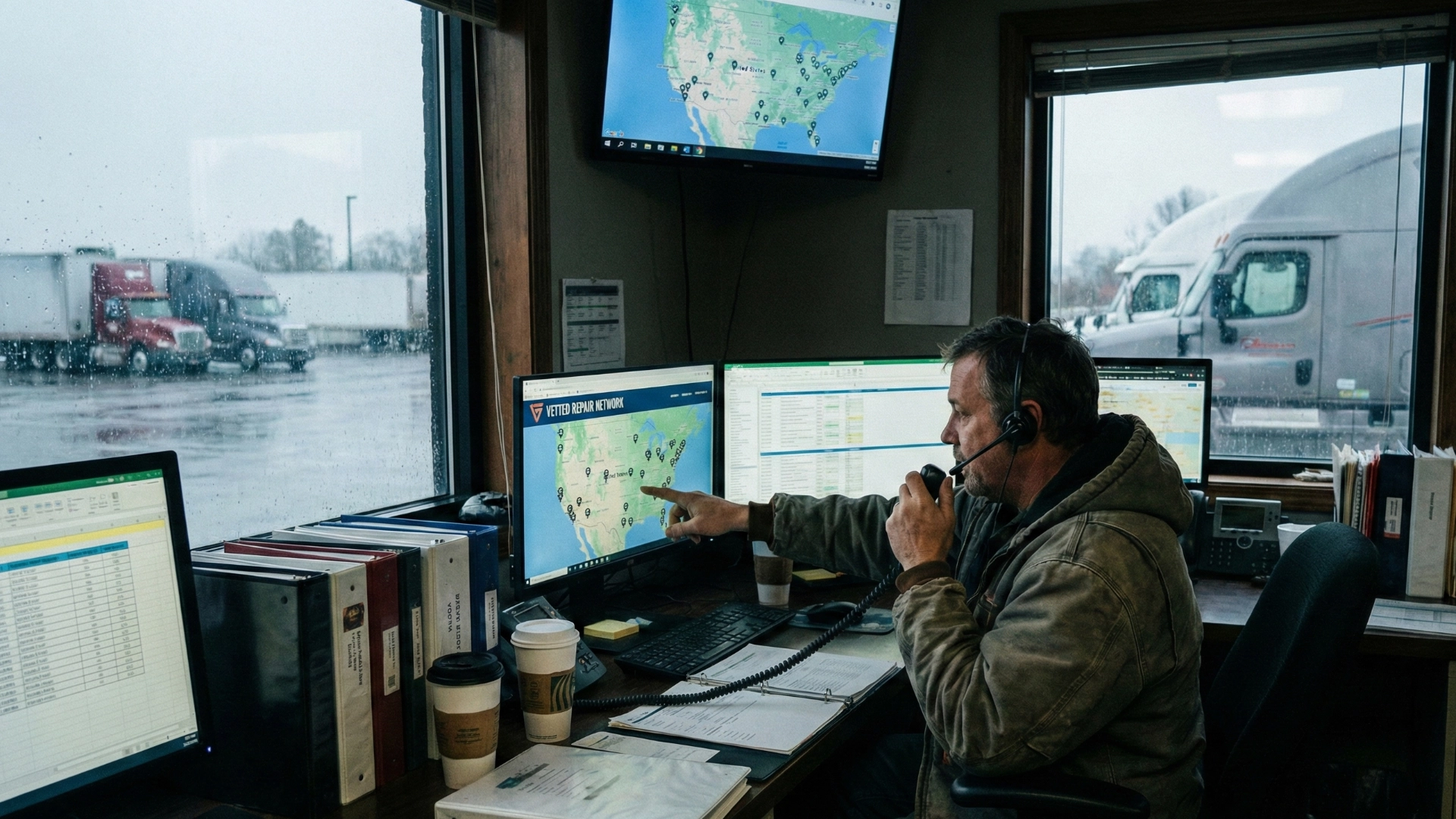


When a truck breaks down two states away, the difference between a good outcome and a bad one is often the same simple fact:
You either have a nationwide truck repair network that you trust, or you start from zero and hope that the local vendor you find is honest and competent.
From what our operations team sees every day, fleets that rely only on local vendor lists pay with longer downtime, higher invoices, and more repeat repairs. Fleets that plug into a vetted network get faster decisions, more predictable pricing, and truck repairs and diagnostics that actually stay fixed.
This guide explains what that looks like in practice for real fleets, not in theory.
On paper, a list of “local shops” looks safe. In reality, fleets do not always break down in the same city or even the same state. Once a truck is outside the home territory, those local lists become thin very quickly.
Our team sees the same pattern:
That is often where the real trouble begins. Shops that have not been tested will sometimes:
From the outside it looks like “the truck is just unlucky”. Inside the numbers, it is obvious that the lack of a trusted local shops and vendors is driving downtime and cost.
Many providers talk about vetted shops. In practice that can mean almost anything. In our case, “vetted” is not a label, it is a track record.
Shops enter our nationwide truck repair network because we have already used them and seen how they perform. Over time, we see:
Shops that do well across those points become regular partners. We know where they are strong and what kind of work they do best. When we call them with a new breakdown, they already understand the way we work, and they often give our cases priority because they know more work will follow.
Shops that cut corners, overcharge, or fail to fix problems properly do not stay in the network. That is the difference between a real vetted network and a random directory with shop names on a map.
From the driver’s point of view, the difference is simple. With a nationwide truck repair for fleets, the driver calls one number and speaks with someone who already has options lined up in a 30 to 100 mile radius. They do not have to search for a shop while parked on the shoulder or at a fuel stop.
From the fleet’s point of view, a few key things change:
That alone cuts a significant amount of guesswork out of every incident. Drivers feel more confident that their truck will go to a place that can actually fix it. Fleet managers see that breakdowns are handled according to a consistent process instead of improvised under pressure.
A nationwide network is not just a list of addresses. The value comes from making the right choice in each case.
Our team looks first at severity and safety:
Those choices are based on detailed information from the driver, not guesswork. That is why getting photos, videos and a clear description of what happened matters so much.
Local vendor lists do not help with that decision. They only tell you who exists in the area. A nationwide truck repair network adds the missing context: who is reliable, who is honest, and who is equipped for this specific kind of failure.
Our experience is that every fleet benefits from having access to a nationwide truck repair for fleets, but the impact scales with size and exposure.
In all of those cases, a nationwide truck repair network gives them options they could not build for themselves, especially in less familiar regions.
One of the biggest differences between a real network and local walk in vendors is how pricing behaves over time.
With a long term relationship inside a nationwide network, shops know that more work is coming. That allows us to negotiate better rates and keep them stable. Over time, some partners lower prices further because volume grows and the relationship deepens. They know they are not fighting for one single job.
Local shops that see you for the first time have no reason to handle pricing that way. In many cases those are the highest hourly rates and highest parts markups a fleet will see. A dispatcher who is desperate to get a truck back on the road will often accept those terms on the spot, then question the invoice only after the damage is done.
A structured nationwide truck repair network does not magically make every repair cheap, but it does make total cost more predictable and much easier to control.
Most fleets adapt quickly to a nationwide truck repair network, but there are a few recurring mistakes we see.
The most common one is drivers trying to repair something themselves without telling anyone, then asking for reimbursement. It usually comes from a good place, but it introduces risk and confusion. If a driver replaces parts without coordination and something goes wrong, it is harder to know what really happened and who is responsible.
The rule is simple. When there is a problem, the driver calls us first. From there we decide whether it is safe for the driver to perform a small task, whether a roadside technician should come, or whether a tow and proper shop repair are necessary. Skipping that step can turn a manageable issue into a larger one.
Another mistake is assuming that all nationwide providers work the same way. Many competitors simply offer discounts or send the first available vendor they find. They do not always weigh repair time, cost, and quality in a structured way.
If a fleet is comparing nationwide truck repair options, there are a few practical questions to ask:
You should avoid providers that cannot explain their selection process, or that admit they mostly just search based on distance and availability. You should also be cautious if all they talk about is discounts, without any detail on diagnostics, repair quality, or repeat failure rates.
A strong nationwide truck repair network should be able to show that it is not just a phone number and a directory, but a system that actually improves outcomes for drivers and fleets.
If you want to check how a real network works instead of relying on local vendor lists, talk to our team.
A nationwide truck repair network for fleets is a group of vetted repair shops and roadside providers across many states that agree to clear standards on repair quality, communication and pricing. Instead of calling random local vendors, fleets use one coordination point that picks trusted partners for each breakdown.
Local vendor lists often work near the home base but break down when trucks move into new regions. Dispatch has to search for unknown shops, which leads to higher prices, longer downtime and repairs that sometimes fail and come back as repeat problems.
A vetted network relies on shops that have already proven they can solve specific failures at fair rates. Coordinators can quickly choose the right shop or roadside provider within a 30 to 100 mile radius, which cuts search time and reduces the risk of repeat repairs and inflated invoices.
Fleets with trucks that regularly cross state lines benefit the most, especially those with 5 to 50 trucks that cannot maintain relationships with shops in every region. Larger fleets also see value because a network makes quality and pricing more consistent as repair volume grows.
Fleets should ask how the provider selects shops, how they review performance over time and how they control pricing. They should avoid providers that only offer generic discounts or simply pass work to the first available vendor without checking repair quality or repeat failure rates.